iWebTV Player
- 3.4
- Rating
- 50.00K
- Installs
- Free
- Price

 Analysis by App-foxy
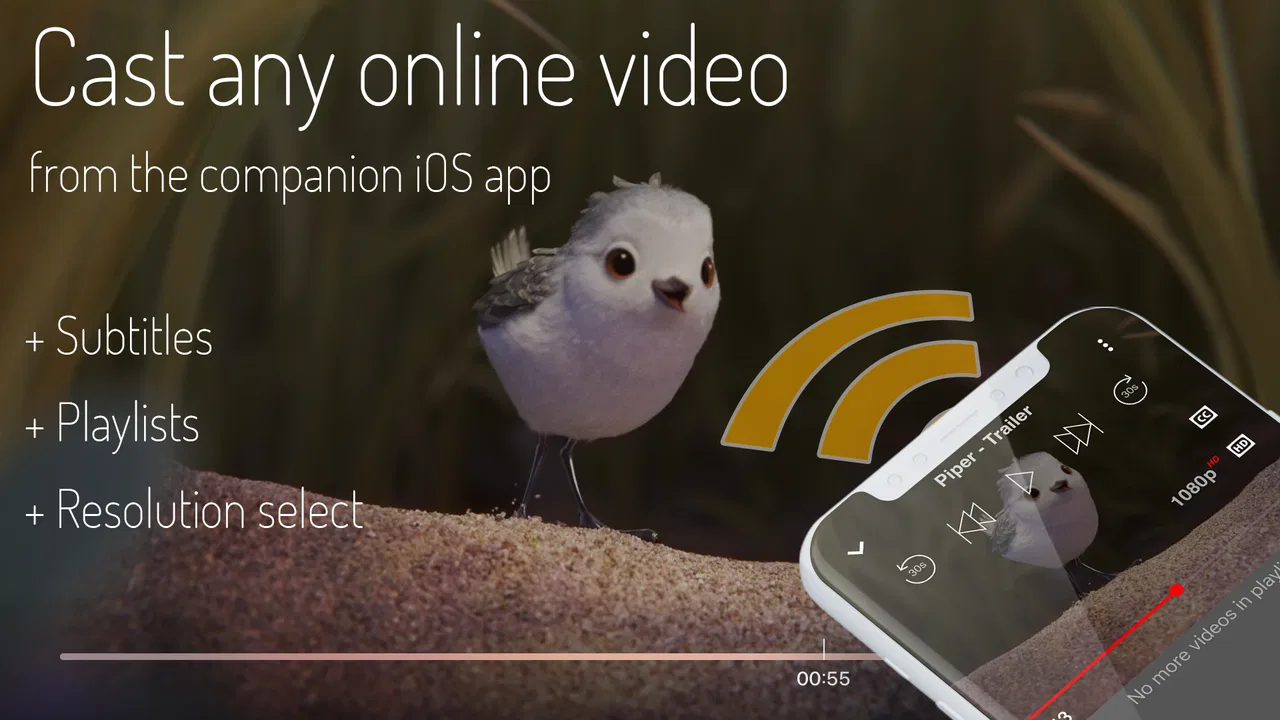
I approached iWebTV Player as a practical viewing tool rather than a full creative studio. Its purpose is straightforward: it lets me play web videos from the companion mobile app, placing it in the video players and editors category while keeping the actual workflow focused on watching. That distinction matters. If you want to create, trim, caption, or publish video, this is not the kind of app I would put at the center of that process. If your creative routine begins with reviewing online material on a phone, however, it can fit neatly into that first stage.
Developed by Swishly, the app is free and aimed at Everyone. It has reached over ten thousand installs, with an average score of 3.4 from a relatively small group of ratings. I read that combination as a sign to keep expectations practical: there is enough use to show that the idea has found an audience, but not enough feedback to treat the app as a universally polished replacement for familiar video tools. I tested it with that realistic mindset, asking where it helps and where a standard browser, dedicated media player, or editing suite would still be the better choice.
From finding a reference to reviewing it comfortably
My most useful way to think about this app is as a handoff point between web content and a mobile viewing session. A creator might find a reference clip, tutorial, interview, product demonstration, or mood piece in a companion mobile app and then use iWebTV Player to play it. That can be more convenient than treating every web video as just another browser tab, especially when the goal is to concentrate on the video itself rather than the surrounding page.
You May Also Like

 Blood Strike: 2.5 Anniversary
Blood Strike’s Loadouts Turn Every Drop Into a Tactical Gamble
A close look at Blood Strike’s custom loadouts: how fast access to signature weapons reshapes its battle royale rhythm, rewards preparation, and narrows the gap between fights.

 Pandora - Music & Podcasts
Pandora’s Music Is Easy to Start, but Harder to Recover
Pandora’s strength is its low-effort path from a seed to a station. Its weak spot is how much confidence it asks you to place in connection, setup, and quiet recovery.

 8 Ball Pool
 Is Built on Rivalries, Rematches, and Routine
A close look at the rivalries, rematches, shared routines, and unanswered safety questions that turn a quick pool match into a persistent mobile community.

 Samsung Music
’s Quiet Strength Is Playing What You Already Own
Its reach comes less from spectacle than from dependable access to a personal library. That simplicity is both the app’s strongest retention engine and its ceiling.

 AccuWeather: Weather Radar
AccuWeather Review: A Quick, Clear Forecast for Everyday Decisions
For everyday plans, the best forecast is the one you can understand quickly. AccuWeather makes rain timing, radar, and local conditions easy to act on, with a few trade-offs.

 Hill Climb Racing
Why Hill Climb Racing Still Turns Crashes Into One More Run
A tiny car, a bumpy hill and one more upgrade: Hill Climb Racing keeps resurfacing because its simple chaos makes every near-miss feel personal.
More From Our News Desk
View All News


The starting point is therefore not a blank canvas. There is no reason to open this app when I want to sketch a concept, record footage, or assemble a timeline. I open it when the source already exists online and I need to inspect it. That makes the app relevant to an early creative decision: should a clip influence the direction of a project? Watching a reference in a player can help me judge pacing, presentation, and general suitability before I spend time building around it.
A simple everyday example is a freelancer preparing a short social video. During research, I might collect a few web videos showing different approaches to an opening sequence. Instead of immediately downloading anything or importing material into an editor, I can use the player to review those references on my phone. That keeps the research stage separate from production and reduces the temptation to start editing before I understand what I am trying to achieve.
There is also a useful distinction between viewing and collecting. A web video may be valuable as inspiration without being something I should copy, download, or reuse. A player designed around web playback supports that review mindset. I can assess a source, make a creative note, and move on to my own work. For anyone who regularly studies online examples, that separation is healthier than treating every reference as raw material.
How the companion-app idea changes the first step
The companion mobile app is central to the stated purpose, so I would not approach iWebTV Player as an entirely independent video library. The workflow begins elsewhere, then the player becomes the place where the web video is viewed. That can be useful when the companion experience is where I discover or organize what I want to watch, but it also means the app is less appealing if I simply want a universal player for files already stored on my phone.
Before relying on it for a presentation or a time-sensitive review, I would run through the complete path with the exact type of web video I plan to use. The important question is not only whether a source opens, but whether the handoff from the companion app feels natural enough for repeated work. A workflow that is pleasant once may become irritating when I need to compare several references in succession.
This is one of the app’s less obvious trade-offs. A specialized route can be cleaner than a general browser when it matches my habits, but it can also add a step when it does not. I would recommend it to someone already using the companion mobile app; I would be more cautious with someone who expects to paste any web address into a player and have it behave like a desktop media utility.
Using it during the making process
Once I move from research into production, the player works best as a companion to an editor rather than as the editor itself. I can use it to check how a web video communicates an idea, compare the feel of different sources, or revisit a tutorial while working in another application. The value is in keeping visual references available without confusing them with the project’s actual footage.
That separation helps with a common creative problem: making decisions from memory. I may remember that a reference had a quick opening or a particular visual rhythm, but memory is unreliable when I am cutting my own material. Opening the source again lets me check the detail directly. I can then adjust my script, shot order, or pacing in the editing app with a clearer target.
For a mobile creator, this can be a lightweight two-device-free workflow. I might watch a reference on my phone, pause mentally at the moments that matter, then switch to my editing tool to make a change. It is not a replacement for importing a clip into a proper timeline, and I would not treat playback alone as a precise frame-by-frame analysis system. Still, it can make casual comparison more immediate than repeatedly searching through a browser.
The practical tip I found most important is to keep the app’s role narrow. I would not use it as the place where I store project decisions, manage assets, or prepare a final delivery. Instead, I would pair each viewing session with a short note elsewhere: what the reference does well, what I want to avoid, and which idea I can adapt without copying. That turns passive watching into a repeatable creative step.
Where it helps and where an editor is clearly better
Compared with a normal browser, a dedicated player can feel more focused because the video is the main event. A browser remains better when I need the full surrounding page, comments, links, creator information, or several research tabs open at once. I would choose the browser for broad discovery and iWebTV Player for a more direct viewing handoff from the companion app.
Compared with a local media player, the roles are different. A local player is the natural choice for footage already saved on the device, especially when I need dependable access during travel or while working with private material. iWebTV Player is oriented toward web videos, so it makes more sense at the reference and review stage than at the offline asset stage.
Compared with a mobile editor, the difference is even sharper. An editor gives me a timeline, trimming, transitions, audio work, text, and an export path. This app should not be judged as though it promises those functions. Its strength is not transforming footage; it is helping me view online material connected to the companion experience. Anyone looking for a single app to take an idea through shooting, editing, and publishing should skip this one and choose a genuine production suite.
Iteration: using references without losing the project
Creative work rarely moves in a straight line. I may watch a reference, change my opening, watch it again, and decide that the original direction was better. In that cycle, iWebTV Player can serve as a quick checkpoint. I can revisit the same web material while refining my own work instead of relying on a vague first impression.
That is particularly useful for tone. A reference may look impressive but feel wrong for the audience I am targeting. Viewing it again after drafting my own version helps me separate technique from suitability. I might borrow the idea of a faster introduction while rejecting the source’s visual style. The player supports that comparison, but the judgment still belongs to me.
Another practical use is tutorial-led work. If I am learning a technique from a web video, I can keep the instructional source close while trying the steps in a separate creative app. I would not assume that playback guarantees a smooth learning experience for every source; web video behavior can vary. My advice is to test the tutorial before starting a longer session, then keep a written checkpoint so I do not have to repeatedly search for the same lesson.
Repeated viewing also exposes a limitation: a player alone does not create a review system. I still need my own method for marking useful moments, recording decisions, and tracking which reference influenced which change. For a small personal project, a notes app may be enough. For team work, I would move quickly to a shared review or production platform because this app is not a substitute for comments, approvals, or version control.
A workflow that avoids unnecessary friction
My recommended routine is simple. I would first identify the creative question, such as whether an opening is too slow or whether a tutorial explains a technique clearly. I would then use the companion mobile app and iWebTV Player to watch only the relevant material. After that, I would write down the decision before opening the editor. This prevents endless browsing from masquerading as progress.
For comparison work, I would review references in a consistent order and judge each against the same question. That makes the session more useful than jumping randomly between videos. If one source fails to play as expected, I would treat it as a workflow warning rather than repeatedly rebuilding the project around it. A dependable fallback browser or local copy of material I am allowed to use can save time when the viewing path becomes inconvenient.
I also would not use an online reference as a final quality check for my own exported video. Web playback can show whether an idea works, but it is not the same as checking my actual file across the destinations where I plan to publish it. That final responsibility belongs to the editing and delivery tools.
Handoff, delivery, and the limits of the tool
The export stage is where I notice the clearest boundary. iWebTV Player is useful before delivery, when I am studying web material or checking a source, but it is not the app I would choose to render a finished project. My handoff would go from the editor to the intended publishing service, with this player remaining a reference tool rather than becoming part of the export chain.
This matters for anyone who reads “video player” and expects a complete media workflow. The app’s store summary describes playing web videos from the companion mobile app, and that is the lens I would use when deciding whether to install it. It does not belong in the same decision category as an editor with export controls, a cloud review system, or a file manager for production assets.
For a solo creator, that limitation may be perfectly acceptable. I can use a focused player for research and keep my production work in the tools already designed for it. For a small team, the question is whether the extra handoff saves time. If everyone already uses the companion mobile app, it may be a convenient viewing step. If the team works from shared folders, annotated cuts, and formal approvals, a professional review platform will be more suitable.
The app is free, which makes experimentation easy and lowers the cost of finding out whether its viewing path fits my routine. I would still judge it by time saved rather than by price alone. A free tool that adds repeated navigation can be less useful than a familiar browser, while a focused tool that removes distractions can earn a place in a daily research workflow.
Device expectations and practical setup
The current version is 1.5.5 and it supports devices running Android 6.0 or later. That gives the app a broad compatibility range for Android users, although compatibility is only the first part of a good experience. I would install it on the device I actually use for research, then test the companion handoff before building a routine around it.
I would also check the basics that affect any web-video session: a stable connection, enough battery for longer viewing, and a comfortable way to watch. These are not special promises from the app; they are practical conditions for using an online player. If I need guaranteed playback in a place with unreliable connectivity, I would prepare an approved offline alternative instead of assuming that a web-focused workflow will be dependable there.
The Everyone age rating makes the app broadly approachable, but that does not remove the need for sensible source selection. The player may be suitable for general audiences while the web material itself varies. For family use, classroom research, or shared devices, I would still choose references carefully and supervise discovery where appropriate.
My verdict for creators and everyday viewers
After using it as part of a creative workflow, I see iWebTV Player as a narrow but understandable tool. It is most convincing when I already work with the companion mobile app and want a direct way to play web videos while researching, learning, or checking references. It is less convincing as a general-purpose replacement for a browser, a local media player, or a full mobile editor.
The app’s modest average score of 3.4 suggests that I should approach it with measured expectations rather than assume a flawless experience. With only a small amount of public feedback behind that score, I would make my own decision based on the exact viewing routine I need. The free price makes that trial reasonable, especially if web-video research is a regular part of my work.
I would recommend it to a creator who wants a lightweight viewing step before editing, a learner following online video instruction, or an everyday user who prefers the companion mobile route for web playback. I would skip it if my main goal is to edit clips, export finished videos, manage a media library, or review work collaboratively. Those jobs call for tools built around timelines, files, publishing, or feedback.
My bottom line is simple: use it as a focused bridge from online reference to creative decision, not as the bridge from raw footage to finished publication. In that role, it can be useful and easy to justify. The moment I expect it to handle the rest of the production journey, the fit becomes much weaker, and a browser, local player, editor, or review platform will serve me better.
FAQs for iWebTV Player
01What platforms does iWebTV Player support?
iWebTV Player is available for both Android and iOS devices, making it versatile for users on different platforms. It supports streaming to a variety of devices, including Chromecast, Roku, and Apple TV, allowing you to watch your favorite content on a larger screen seamlessly.
02Does iWebTV Player support all video formats?
iWebTV Player supports a wide range of video formats, ensuring compatibility with most online content. From MP4 to MKV, the app can handle various formats. However, for certain rare or proprietary formats, you might need to convert the files or look for additional support.
03Is there a subscription fee for iWebTV Player?
iWebTV Player offers a free version with basic features, but to unlock the full potential and remove ads, users can opt for a premium subscription. This provides an enhanced viewing experience with additional features, such as HD streaming and priority support.
04How user-friendly is iWebTV Player for beginners?
iWebTV Player is designed with an intuitive interface, making it easy for beginners to navigate. The setup process is straightforward, and the app provides clear instructions for connecting to your preferred streaming device, ensuring a smooth start even for first-time users.
05Can iWebTV Player stream content from any website?
iWebTV Player allows streaming from a vast array of websites, though not all sites may be compatible due to restrictions or unsupported content types. The app excels with popular video sites, and users can easily test compatibility by entering the website URL in the app.
Pros
- Easy to navigate interface.
- Supports multiple video formats.
- Chromecast and AirPlay compatible.
- High-quality streaming resolution.
- Fast connection and minimal buffering.
Cons
- Ads can be intrusive at times.
- Requires stable internet for best performance.
- No offline viewing option.
- Limited features in free version.
- Occasional crashes on older devices.

iWebTV Player
Gallery